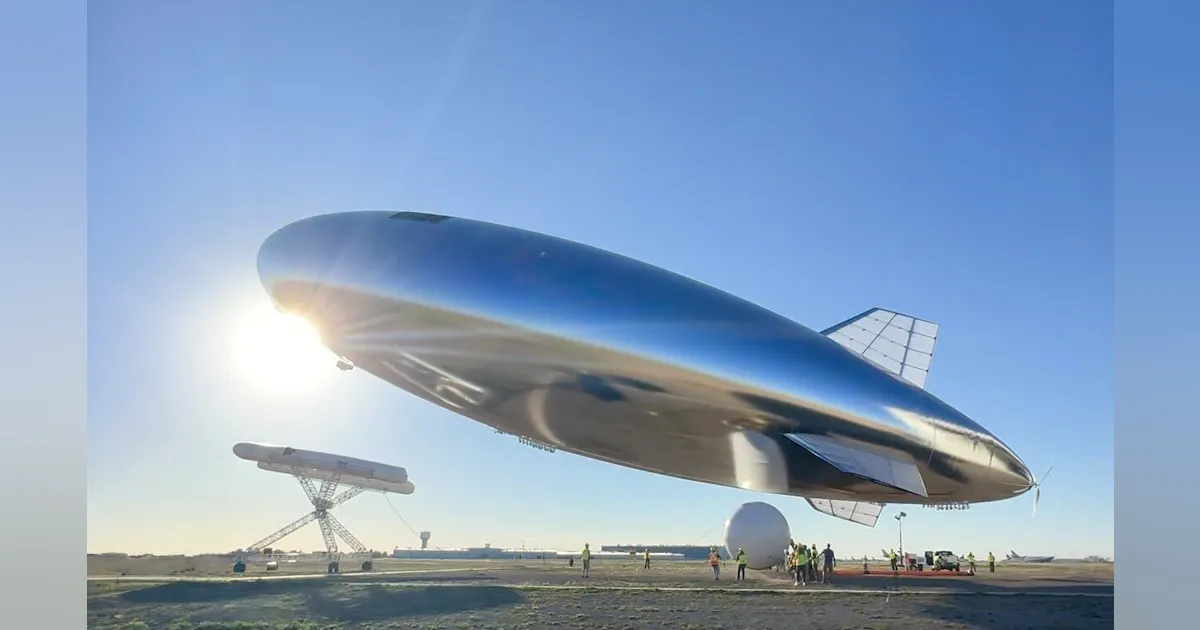
Sceye HAPS Specs Payload, Endurance And Battery Breakthroughs
1. Specifications will tell you what a Platform Can Actually Do
There’s a tendency in the HAPS industry to speak about ambitions instead of engineering. Press releases outline coverage areas as well as partnership agreements and commercial timelines, but the harder and more valuable discussion is about specifications – what exactly the vehicle is carrying as well as how long it stays on the road, and the energy systems that make lasting operation feasible. If you’re trying understand whether a platform that is stratospheric is real-time mission-capable or remains in the development phase of promising prototypes, capacities for payloads, endurance estimates and battery power are where the substance lives. The vague promises of “long endurance” and “significant payload” seem easy. Delivering both simultaneously at stratospheric altitude is the engineering hurdle that separates credible programmes from fanciful announcements.
2. Lighter-Than-Air Architecture Changes the Payload Equation
The principal reason that Sceye’s Airship design has the capacity to carry significant payload is buoyancy carries out the principal task that keeps the vehicle moving. This is not a nebulous difference. Fixed-wing solar aircrafts have to generate aerodynamic lift continuously, which requires energy and puts structural constraints on the vehicle that limit the amount of weight the vehicle can transport. Airships that are floating in the stratosphere doesn’t spend energy fighting gravity the same way — thus the power generated from its solar array and the structural capacity of the vehicle, can be devoted to propulsion, stationkeeping and payload operation. It’s the result of an ability to payload that fixed-wing HAPS designs with comparable endurance really struggle to match.
3. Payload Capacity is a determinant of mission flexibility
The value of a greater payload capacities becomes apparent as you think about the kind of stratospheric tasks actually need. The payload of telecommunications — antenna systems, signal processing hardware, beamforming equipment has significant weight and volume. So does a greenhouse gas monitoring suite. As does a wildfire detector as well as an earth observation. The ability to run any of these mission successfully requires a large amount of hardware. Multiple missions at once requires more. Sceye’s airship requirements are formulated by the premise of a stratospheric platform to be capable of carrying a beneficial combination of payloads instead than forcing users to select between observation or connectivity as it isn’t possible to carry both simultaneously.
4. Endurance Is Where Stratospheric Missions Win or Lose
A platform that reaches stratospheric elevation for up to 48 hours prior to needing to go down is great for demonstrating. Platforms that remain in place throughout months or for weeks at it is very useful in the development of commercial services. The difference between the two results is nearly entirely an energy-related issue, specifically, if the vehicle can generate sufficient solar power during daylight hours to run all its equipment and recharge the batteries enough to sustain complete operation through the night. Sceye endurance goals are based on this challenge in the diurnal cyclic cycle with the idea of treating energy availability for overnight use is not a target for a stretch but rather as the primary prerequisite for all other designs that should be designed around.
5. The Lithium Sulfur Battery is a Real Step towards a Reversal
The battery chemistry that powers traditional electronic devices and electric vehicles — predominantly lithium-ion possesses energy density characteristics that can cause limitations for stratospheric endurance applications. Every kilogram of battery mass carried high will not be available for payload, but there is a need for enough stored energy to keep a huge platform running through a tense night. The chemistry of lithium-sulfur batteries alters this equation dramatically. With energy density values that reach 425 Wh/kg of lithium, these batteries have the capacity to store more energy per pound than similar lithium-ion batteries. In a vehicle that is weight-constrained, where every Gram of battery mass will have potential costs in payload capacity, that improvement in energy density isn’t simply incremental but is actually architecturally significant.
6. Innovations in Solar Cell Efficiency are the Other Half of the Energy Story
The battery’s energy density determines how much power you can save. The efficiency of solar cells determines how quickly you are able to replenish it. Both are important, and advancement of one without advancement in the other causes a distorting energy architecture. Improvements in high-efficiency photovoltaic cells — which include multi-junction versions which can absorb a wider range of solar power than conventional silicon cells — have meaningfully improved the amount of energy available to the solar-powered HAPS vehicle during daylight hours. Together with lithium-sulfur battery storage, these advances are what make a true closed power loop possible by generating and storage enough energy daily that all systems can be operated without the use of external energy sources.
7. Station-Keeping Draws Constantly From the Energy Budget
It’s tempting to think of endurance solely in terms of staying up there, but when it comes to the stratospheric platforms, staying on the ground is just a part of the energy equation. station keeping — actively maintaining a position against the stratospheric wind by propulsion that is continuous draws power continuously and comprises large proportions of energy use. The budget for energy must support station keeping in conjunction with payload operation, avionics, communications, and thermal management systems all at once. This is why specs with endurance numbers without describing which systems are running at the time of endurance are difficult to evaluate. True endurance estimates assume full operation, not a basicly designed vehicle with the payload off.
8. The Diurnal Cycle Is the Constraint on Design that Everything else Does Flow From
Stratospheric engineers are discussing the diurnal cycle, the rhythmic daily cycle of solar energy availability — as the central constraint upon which platform architecture is designed. At daytime the solar array has to provide sufficient power to run all the systems and recharge the batteries up to capacity. At night, those batteries need to sustain the entire system until sunrise without the platform shifting, deteriorating efficiency of the payload, or being in any kind or mode which would disrupt a continual monitoring or communication mission. Designing a vehicle that threads this needle reliably over the course of a day over months, is the core engineering problem of solar-powered HAPS development. Every single specification choice including solar array size or battery chemistry, propulsion efficiency, power draw of the payload — feeds into this single main constraint.
9. The New Mexico Development Environment Suits This Kind of Engineering
Designing and testing a high-altitude airship requires infrastructure, airspace and conditions in the atmosphere which aren’t readily available everywhere. Sceye’s headquarters in New Mexico provides high-altitude launch and recovery capabilities, clean weather conditions to test solar power, in addition to accessing the kind of extended, uninterrupted airspace that allows for long-term flight testing. Of the aerospace companies operating in New Mexico, Sceye occupies an unique position- focusing on stratospheric lighter air devices rather than the rocket launch programs commonly associated with the region. The rigor of engineering required to verify endurance claims and battery endurance under real stratospheric conditions is precisely the kind of work that can be benefited from a specific test environment as opposed to sporadic flights elsewhere.
10. Specifications that can withstand Inspection Are What Commercial Partners are looking for.
In the end what makes requirements are not just about technical relevance is that commercial partners making investments must know that the numbers are real. SoftBank’s decision to build a national HAPS system in Japan and the target of pre-commercial services in 2026, is based upon the fact that Sceye’s software can perform as specified in the operational environment not only in controlled tests, but sustained through the entire duration of a mission that a commercial network requires. The capacity of the payload that is stable by having a full telecoms and observation suites aboard endurance measurements that are validated through real-world operations, and battery performance that is demonstrated over real diurnal cycles is what will transform an aerospace initiative that has potential into a infrastructure that major telecoms operator is willing to stake its network plans on. Have a look at the top rated Sceye News for site advice including Stratospheric missions, aerospace companies in new mexico, softbank haps pre-commercial services japan 2026, softbank pre-commercial haps services japan 2026, sceye haps softbank japan 2026, telecom antena, Sustainable aerospace innovation, Closed power loop, Closed power loop, sceye haps airship status 2025 2026 softbank and more.
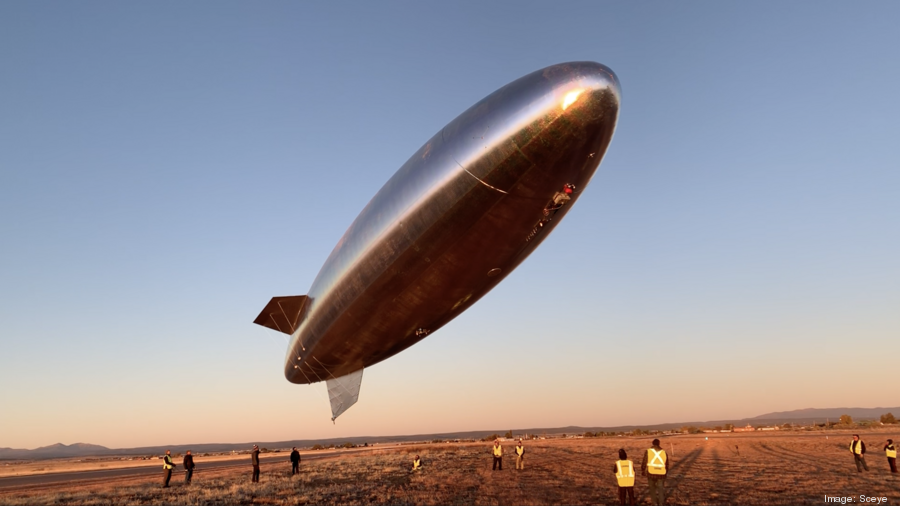
SoftBank’S Haps Pre-Commercial Services: What Can We Expect In 2026?
1. Pre-Commercial Marketing is a Particular and Significant Milestone
The term “terms of service” is essential here. Pre-commercial services constitute an entirely distinct stage in the creation of any new communication infrastructure — going beyond the experimental demonstrations, beyond proof-ofconcept flight campaigns, and ultimately into realm where real-world users get real-time service in conditions that close to what a complete commercial deployment looks like. It is a sign that the system is maintaining its position reliably, the signal is in compliance with quality thresholds that actual applications depend on, the ground infrastructure interfaces with the stratospheric telecom antenna correctly, and the regulatory approvals are in place to operate in areas with a lot of people. Reaching pre-commercial status is not an objective for marketing. It’s an operational goal which is why the announcement that SoftBank has made a public commitment to the goal through Japan in 2026, sets the bar for what the engineering both sides of the partnership needs to surpass.
2. Japan is the perfect country to Begin This Challenge
It is clear that choosing Japan as the place to launch ultraspheric precommercial services isn’t an arbitrary choice. The country boasts a host of attributes which make it ideal for the first deployment environment. Its mountainous terrain along with the thousands of islands inhabited by people and long and complex coastlines -pose genuine coverage issues that stratospheric equipment is designed to tackle. The regulatory framework is advanced enough to handle the airspace, spectrum and other issues the stratospheric operation raises. The mobile network infrastructure and services, owned by SoftBank and SoftBank, is the connectivity layer that a HAPS platform will need to connect to. Its population also has the device ecosystem and the digital literacy required to access stratospheric broadband services, without the need for an extensive period of technology development that can delay significant uptake.
3. Expect Initial Coverage to Focus On Underserved Areas and Strategically Important Areas
Pre-commercial deployments aren’t designed to cover an entire country simultaneously. It’s more likely to be the targeted rollout of coverage to areas where the gaps between current coverage and the benefits that stratospheric connectivity could provide is the most obvious, and where the strategic demand for coverage prioritizing is strongest. In Japan’s context, that is a reference to islands that are currently dependent upon expensive and inadequate connections to satellites. It also includes mountains and areas of rural where terrestrial network economics have never been able to sustain adequate infrastructure and coastal zones where disaster resilience should be a top priority due to the dangers of earthquakes and typhoons for the country. These areas provide the clearest demonstration of stratospheric connectivity’s value and the most useful operational data needed to refine coverage, capacity, as well as the management of platforms prior to rolling out a wider rollout.
4. Its HIBS Standard Is What Makes Device Compatibility Possible
One of the issues that anyone ought to be asking about stratospheric wireless is whether it requires specialist receivers or is compatible with standard devices. A framework called the HIBS framework — High-Altitude IMT Base Station -is the result of a standards-based solution to that question. By adhering to IMT standards that are the basis of 4G and 5G networks globally, any stratospheric device operating as a High-Altitude IMT Base Station is compatible with the smartphone and device ecosystem that exists within the coverage area. For SoftBank’s pre-commercial services, those who subscribe to the those areas that are covered should be able to connect to stratospheric networks using their existing devices without needing to purchase additional hardware -a crucial prerequisite for any service that hopes to reach the masses as well as those living in remote regions, who require alternatives to connecting as well as are the least equipped to purchase specialist equipment.
5. Beamforming Will Determine How Well capacity is distributed
A stratospheric-type platform that covers large areas doesn’t necessarily offer a consistent amount of capacity over this footprint. What spectrum and signal energy are allocated across the coverage region is dependent on beamforming capabilities which is the capability of the platform to direct signals towards areas those areas where demand and usage are concentrated instead of broadcasting equally across vast uninhabited areas. To demonstrate SoftBank’s preliminary commercial phase, demonstrating that beamforming from an extremely high-frequency telecom antenna can supply commercially sufficient capacity certain population centers within a large coverage area is essential as will showing coverage areas. The wide coverage footprint, with its thin, usable capacity shows little. A targeted delivery of usable broadband to defined zones of service confirms the commercial model.
6. 5G Backhaul applications could precede Direct-to-Device Services
In certain deployment scenarios, one of the earliest and most simple ways to establish the reliability of stratospheric connectivity isn’t direct connectivity to consumers, but 5G backhaul – connecting existing infrastructure on the ground in areas in which terrestrial backhaul is not sufficient or not present. A remote area may have some equipment on the ground but lack the high-capacity connection to the larger network which is what makes it useful. A stratospheric platform that provides the backhaul link gives functional 5G coverage across communities served by existing ground equipment without demanding that end users interact via the stratospheric device directly. This scenario is easy to prove technologically valid, gives concrete and quantifiable value and enhances operational confidence in platform performance prior to the more complex direct device-to-device component is included.
7. A Sceye’s platform performance in 2025 Sets The Stage for 2026.
Pre-commercial service targets for 2026 is dependent entirely on what is achieved by the Sceye HAPS airship achieves operationally in 2025. Payload performance, station-keeping validation under real atmospheric conditions, energetic system behavior over a variety of diurnal cycle, and integration testing needed to prove that the platform’s interface is correct with SoftBank’s network architecture all have to be at a sufficient level of maturity before pre-commercial services can begin. Updates on Sceye Airship Status for HAPS through 2025 are, therefore, not merely issues in the news, they provide the best indicators of whether the 2026 milestone is tracking in line or is accumulating the type and amount of tech-related debt extends commercial timelines into the future. What happens in the engineering department in 2025 is the story that will be made in advance.
8. Disaster Resilience will be Tested and Not Only a Reported One
Japan’s exposure to disasters means that any stratospheric service that is pre-commercial and operating across Japan will almost likely encounter situations — tsunamis, earthquakes and disruption to infrastructure test the resilience of the platform and its value as emergency communications infrastructure. It is not a problem to the deployment context. This is one of the finest features. A stratospheric platform that maintains station and continues providing connections and monitoring capability during major weather or seismic event in Japan provides a proof point that no amount of controlled testing could duplicate. The SoftBank pre-commercial phase will provide real-world evidence about how stratospheric infrastructure functions in the event that terrestrial networks fail — precisely the evidence that other potential operators in catastrophe-prone countries need to be able to see prior to committing to their own deployments.
9. The Wider HAPS Investment Landscape Will React to What happens in Japan
It is true that the HAPS sector is attracting significant investment from SoftBank and other companies, however the larger telecoms and infrastructure investors remain in the watchful eye. Large institutions, national telecoms operators from other countries and government officials who are looking at stratospheric infrastructure for their own coverage and monitoring requirements follow what happens in Japan with great interest. A successful precommercial deployment — platforms on station and services that are operational, as well as the performance metrics that meet thresholdscan accelerate investment decisions across the sector in ways that continued demo flights and partnership announcements will not. However, serious delays or performance lapses could trigger changes to the timelines of the industry. The Japan implementation has significant significance for the whole stratospheric connectivity sector, not just for the Sceye SoftBank partnership specifically.
10. 2026 Will Let Us Know if Stratospheric Connectivity Has Crossed the Line
There’s a dividing line in the evolution of any technology that transforms infrastructure from the point where it’s promising and stage where it’s actually being used. Electricity, aviation, mobile networks and the internet infrastructure all crossed that boundary at certain timesnot at the time that they first demonstrated at the time, but when it had been first operating reliably enough that institutions and individuals began looking at its presence rather than focusing on its potential. SoftBank’s commercial HAPS service in Japan represent the most reliable near-term candidate for the moment when stratospheric connectivity is crossing that line. Whether the platforms hold station through Japanese winters, whether the beamforming service is sufficient for islands, and if the service can withstand the types of conditions Japan frequently encounters will determine whether 2026 is remembered as the day that the stratospheric internet was a real infrastructure or if the timeline was reset again. Check out the most popular sceye haps airship status 2025 2026 for website recommendations including sceye haps status 2025, sceye earth observation, whats the haps, space- high altitude balloon stratospheric balloon haps, Sceye stratospheric platforms, what are haps, softbank sceye partnership, sceye haps status 2025 2026, Sceye HAPS, whats haps and more.